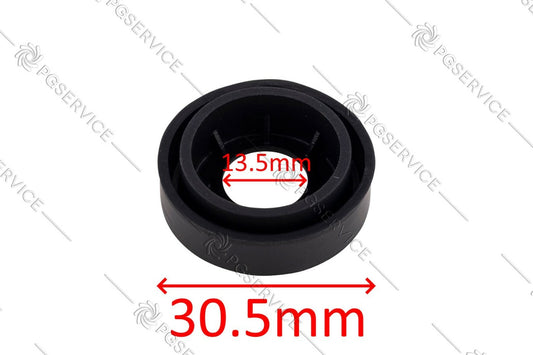
Collection: Appliance Seals (Fridge, Oven, Coffee Machine, Washing Machines)

Seals are essential sealing components in household appliances: they prevent air, water, steam, or pressure from passing between two surfaces. When a seal loses its elasticity, hardens, or breaks, the appliance may lose efficiency, consume more energy, or stop working correctly. An effective seal ensures an airtight seal, insulation, and protection of the internal parts.

Fridge seal Oven seal Coffee machine seal O-ring Steam seal Door seal Whirlpool Electrolux De'Longhi Bosch Samsung LG

Can't find the right seal? Contact us with the brand, model, and a photo of the location or spare part: we'll help you identify it correctly.

Appliance seals: types, compatibility, guide and FAQ

Main applications in our catalog

Seals are used in almost all household appliances: refrigerators, ovens, washing machines, dishwashers, coffee machines, irons, and steam appliances. They are found on doors, lids, tanks, hydraulic groups, and closing systems.

Refrigerators
Whirlpool · Samsung · LG · Bosch
Door seals for thermal insulation and airtight sealing
Ovens
Electrolux · Whirlpool · Bosch
High-temperature resistant seals for oven doors
Coffee machines
De'Longhi · Krups · Saeco
O-rings and seals for brewing groups and water circuits
Washing Machines / Dishwashers
Bosch · Siemens · Electrolux
Door seals and water-leak-proof door seals
Irons
Rowenta · Polti · Braun
Seals for steam and high-temperature circuits
Small Appliances
Ariete · Moulinex · Kenwood
Seals for containers, lids, and closing systems

Types of seals

Refrigerator door seals

They ensure an airtight seal, keeping the cold inside and preventing loss. If damaged, they increase energy consumption and compromise food preservation.

High-temperature seals

Used in ovens and high-heat appliances, they withstand high temperatures and ensure thermal insulation and safety.

O-rings and hydraulic seals

Found in water and steam circuits, they prevent leaks and ensure the correct pressure in dispensing systems.

Elastic and strike seals

Used on lids, containers, and moving parts to absorb vibrations and ensure stable closures.

How to identify the correct seal

  • Exact brand and model of the appliance
  • Seal position (door, water circuit, lid)
  • Shape and dimensions of the original spare part
  • Material (rubber, silicone, EPDM)
  • Spare part code, if available

Most common problems and solutions

❄️Fridge does not stay cold → worn door seal
💧Water leaks → damaged O-ring or circuit seal
🔥Oven heat loss → deteriorated seal
⚡Coffee machine loses pressure → worn brewing group seal
🦠Mold or bad odors → dirty or damaged seal
📏Incompatible spare part → incorrect dimensions or profile

FAQ — Frequently Asked Questions

Are the seals universal?

No. They are specific to the model and function. Even small differences can compromise the seal.

When should a seal be replaced?

When it loses elasticity, breaks, or no longer ensures a proper seal. Wear over time is the most common cause.

Does a damaged seal increase energy consumption?

Yes. An improper seal causes loss and makes the appliance work harder.

Can I adapt a similar seal?

This is not recommended: the shape and dimensions must be precise to ensure sealing and safety.

How can I check if the seal is damaged?

Typical signs are cracks, stiffness, deformation, or lack of adhesion between the surfaces.

Is a photo enough for you to identify the spare part?

Yes, especially if it also includes the appliance model and the seal's position.

440 products